Uganda: Stable policy, anchored momentum
Real GDP growth
Average inflation
Central Bank Rate
Uganda's economy sustained strong momentum through FY2025/26, combining robust growth with the currency and price stability that have underpinned recent performance. Real GDP grew by an estimated 6.4%, broadly in line with the 6.3% recorded in FY2024/25.
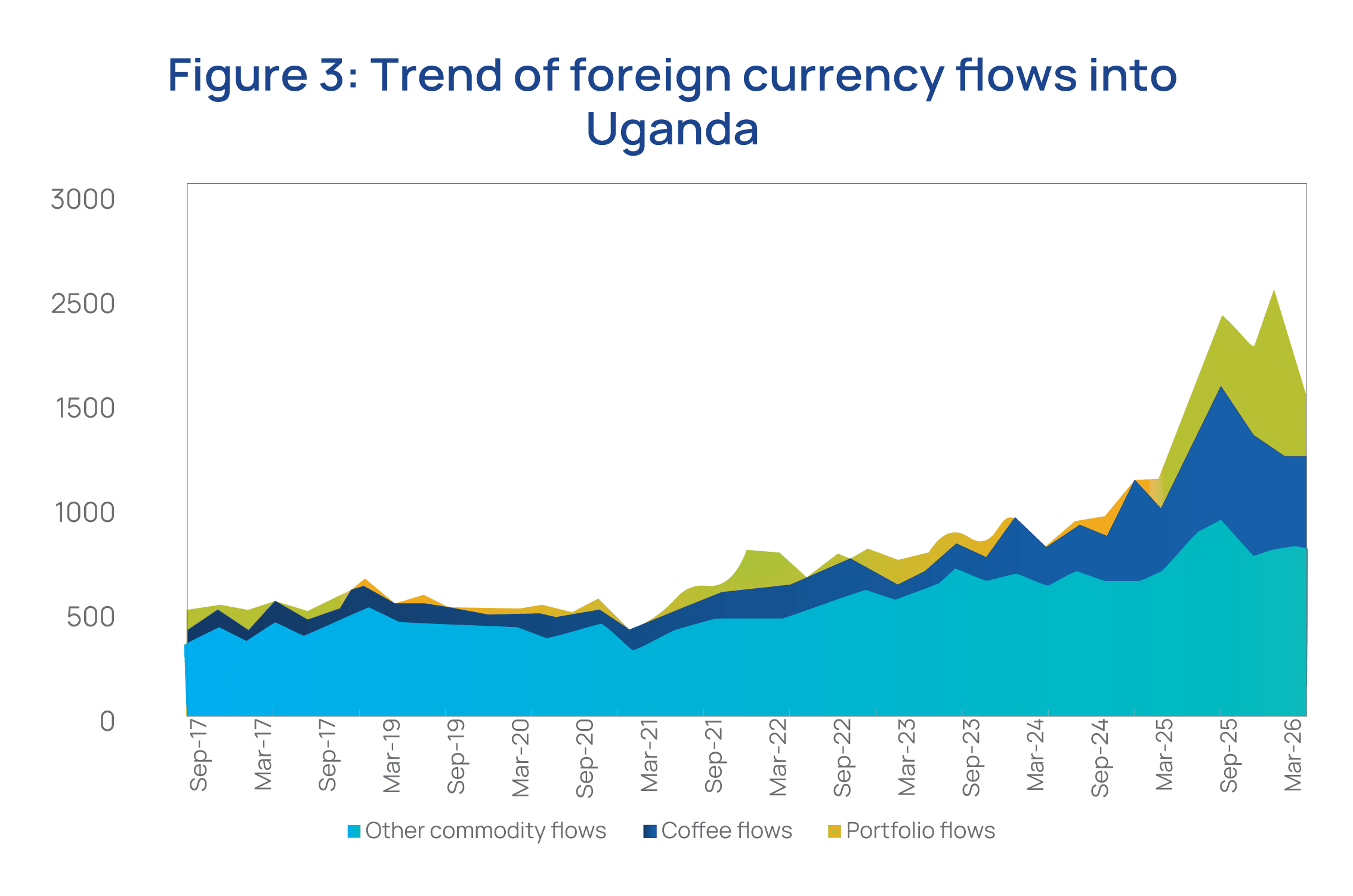
Growth was mainly driven by the services sector, amidst increased public investment and a stable macroeconomic environment. Record coffee and gold receipts, strong portfolio flows, together with a soft US dollar, also supported the external position and underpinned the Ugandan shilling, which appreciated through most of 2025. The Middle East conflict interrupted that strength, triggering a depreciation of about 5.4% between February and April 2026. The currency recovered much of the move by year-end as energy prices reversed, leaving it broadly stable over the year.
Inflation remained low and well anchored, with headline inflation averaging around 3.3% over the year, below the Bank of Uganda's 5% medium-term target. The energy component turned up late in the period as the conflict lifted fuel and utility prices, prompting the central bank to revise its near-term inflation outlook upward. Against this backdrop the Bank of Uganda held the Central Bank Rate at 9.75% throughout the financial year, maintaining a steady and relatively firm stance that anchored inflation expectations and kept domestic yields attractive.
Fiscal policy remained expansionary on the back of continued infrastructure spending. The overall fiscal deficit widened to around 6.6% of GDP, from 6.0% the prior year, while public debt increased to about 54.5% of GDP. The external accounts were supported by record portfolio flows and strong export receipts for most of the year. However, they came under renewed pressure late in the period as higher fuel and fertiliser import costs widened the trade bill. With commercial oil production expected to begin in FY2026/27, both the growth and fiscal trajectories were poised for a structural shift by year-end.