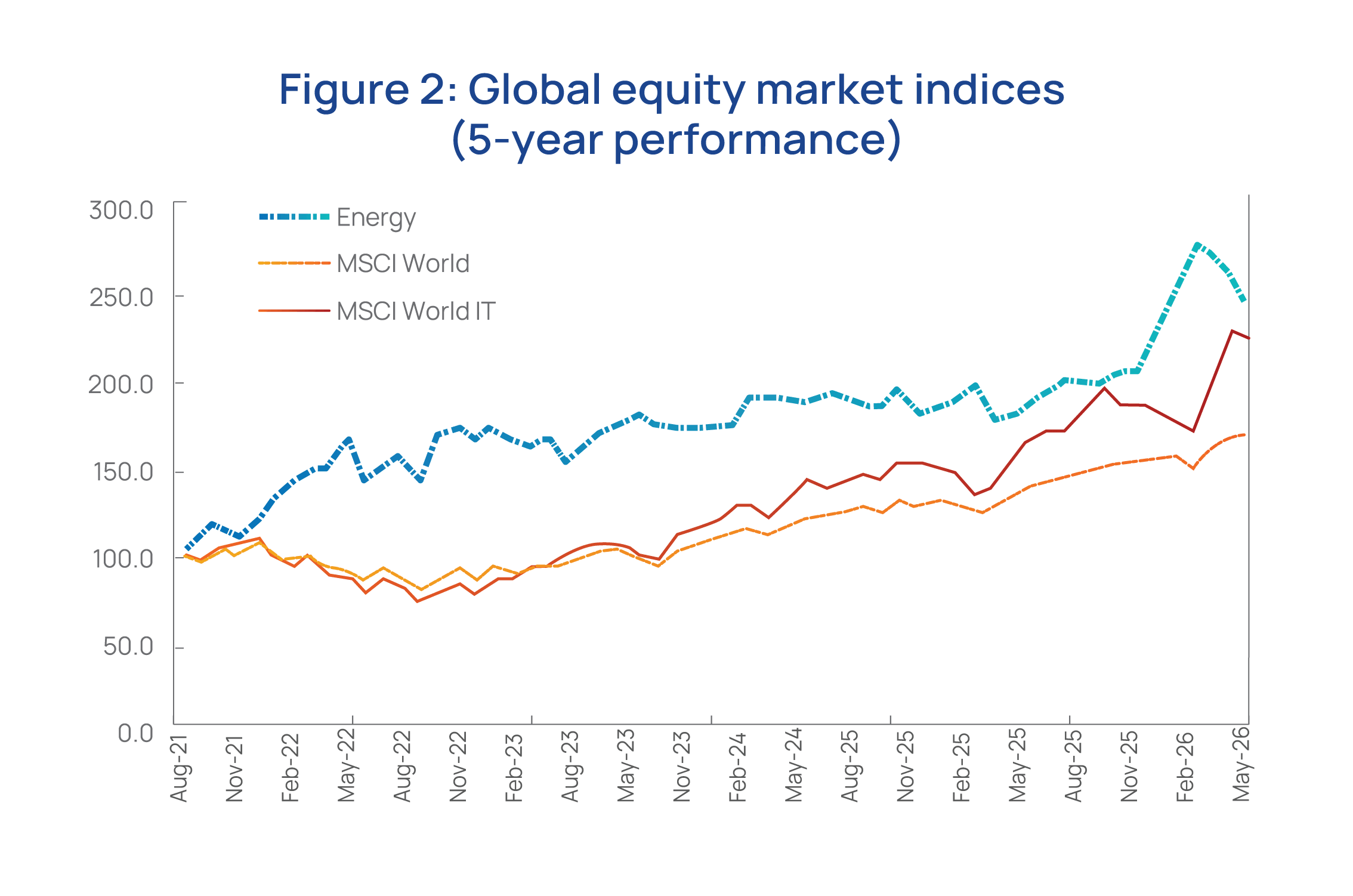
The year's two forces were also reflected in global markets, with technology benefiting from the investment cycle and energy responding to the geopolitical shock. Over the past 5 years, both sectors have increasingly cleared above the broad market, demonstrating their growing importance to global markets.
Monetary policy looked through the temporary energy spike. Major central banks had entered the financial year on a gradual easing path as inflation receded. Although the mid-February 2026 price surge briefly complicated that stance, its later reversal broadly allowed most policymakers to preserve the year's easing bias and sustain the accommodative financial conditions that supported activity into the close of the period.
Africa: Resilient growth, strong headwinds
Sub-Saharan Africa growth
Regional inflation
Africa-wide growth
Sub-Saharan Africa grew by an estimated 4.5% in 2025, with activity accelerating broadly across country groups. Regional inflation moderated to around 3.4% by the end of the year, on account of lower global food and oil prices. The continental picture was similar: the Economist Intelligence Unit estimated Africa-wide growth at about 4.0% for 2025, supported by accommodative monetary and fiscal policies.
Against a decade of currency and debt stress, the year stood out for its relative macroeconomic calm. That calm came under pressure following the escalation of the Middle East conflict as it lifted energy, transport, and fertiliser costs; feeding into food prices across a region where food dominates household consumption. The impact divided the continent.
Hydrocarbon exporters such as Nigeria and Angola, together with gold producers, drew temporary support from stronger commodity prices. However, numerous net energy importers faced deteriorating external balances and tighter financing conditions. Compounding this, a marked reduction in donor aid and diminished global risk appetite squeezed financing for economies whose fiscal buffers were already thin. The combination of these developments left the region more exposed to external shocks than its headline growth suggested.